
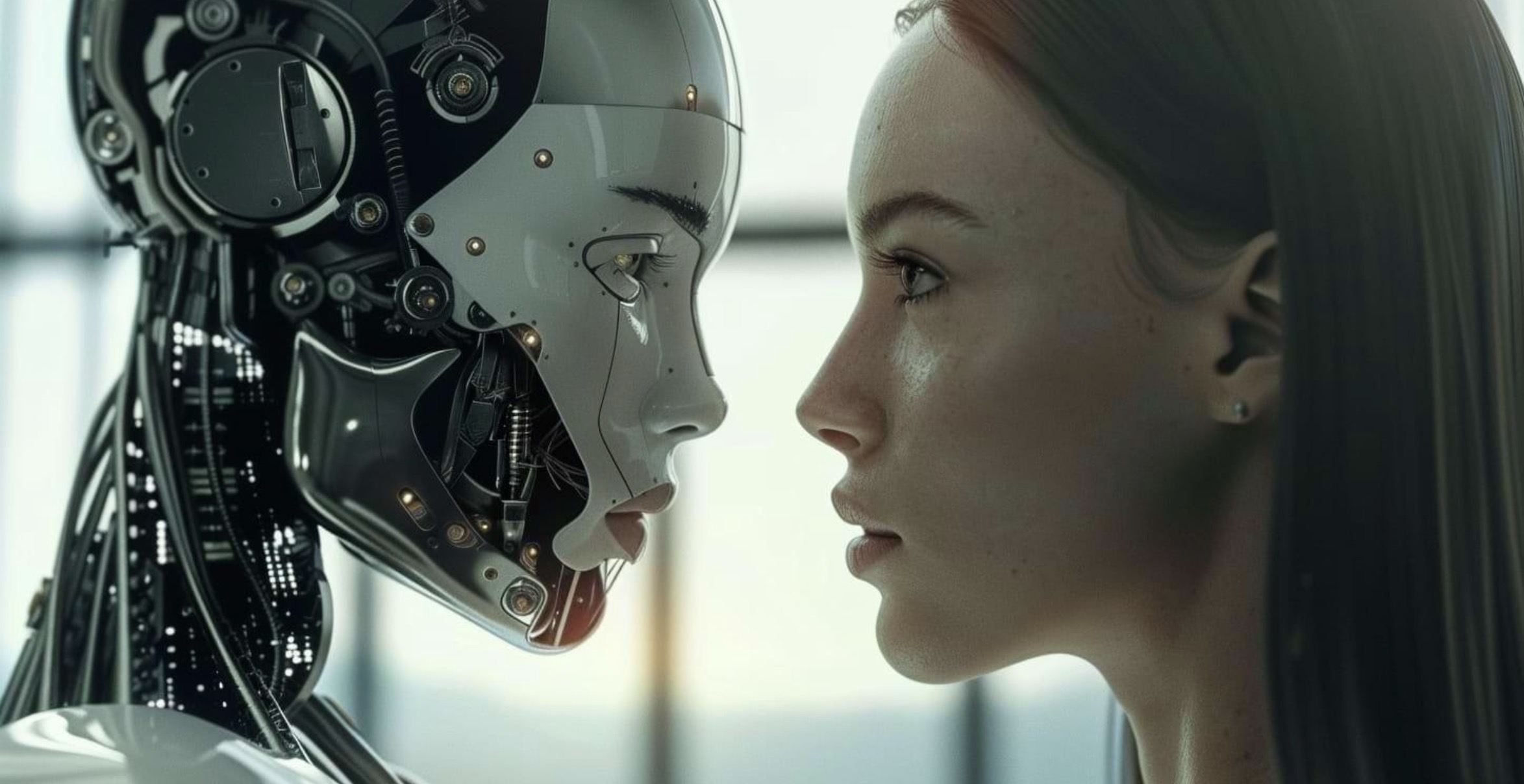
Humanity stands at a strange and historic threshold. For the first time in history, we are creating machines capable of performing not only physical labor, but increasingly intellectual and creative tasks once believed to belong exclusively to the human mind. Artificial intelligence can now write essays, generate paintings, compose music, diagnose diseases, imitate voices, and converse with astonishing fluency. With every passing month, machines become faster, more efficient, more capable, and more deeply integrated into daily life.
This transformation has inspired excitement, fear, and profound philosophical reflection. Many people wonder: if machines can think, create, and communicate better than humans in countless domains, what remains uniquely human? What is the value of humanity in an age of intelligent automation?
The answer may lie not in what humans can produce, but in what humans are.
For centuries, civilization measured progress through efficiency, productivity, and control over nature. The industrial revolution mechanized muscle; the digital revolution mechanized information; artificial intelligence is now mechanizing cognition itself. Tasks that once demanded years of learning can now be executed instantly by algorithms. Entire industries are being reshaped by automation. Human beings increasingly compete not only with one another, but with systems capable of generating near-limitless outputs at extraordinary speed.
Yet beneath this technological triumph emerges an unsettling paradox. The more polished, optimized, and frictionless machine-generated content becomes, the more many people begin to hunger for something imperfectly human.
Why?
Because human expression carries something deeper than technical precision. A human sentence is not merely an arrangement of words; it is the residue of lived experience. Behind a poem may exist heartbreak. Behind a novel may exist loneliness, struggle, trauma, hope, memory, or longing. Human creativity emerges not only from logic, but from vulnerability and consciousness itself.
A machine can imitate sorrow. A human being suffers.
A machine can generate a love letter. A human being knows what it means to fear abandonment, to grieve loss, to cherish another person despite uncertainty and mortality. Human words carry emotional weight because they are connected to lived existence. They emerge from nervous systems shaped by evolution, memory, biology, culture, relationships, and mortality.
This distinction matters profoundly.
Artificial intelligence processes patterns in data. Human beings transform existence into meaning.
Two individuals may witness the same sunset, yet interpret it differently. One sees atmospheric physics; another remembers childhood; another contemplates God; another feels grief for someone no longer alive. Human beings are symbolic creatures. We turn experience into art, myths, religions, philosophies, music, rituals, and civilizations. Meaning is not extracted mechanically from information; it is constructed through consciousness.
Perhaps this is why imperfect human creativity still moves us more deeply than flawless synthetic output. Imperfection often contains authenticity. A trembling voice during a speech, an unfinished brushstroke, a cracked sentence in a diary, or tears interrupting a song may reveal more truth than polished perfection ever could. These flaws are not failures of humanity; they are evidence of humanity.
In fact, many traditions have long recognized the beauty of imperfection. The Japanese philosophy of Wabi-sabi values the incomplete, the transient, and the flawed because they reflect the realities of existence itself. Human beings age, break, heal, adapt, and disappear. Our fragility gives emotional significance to our creations.
Mortality may be one of the most important dimensions of human worth.
Human beings create art because time is limited. We love because life is temporary. We search for meaning because we know death awaits us. Entire civilizations may be understood as humanity’s response to mortality: literature, monuments, science, religion, philosophy, and even technological progress are attempts to transcend impermanence or leave traces behind.
Machines do not fear death. They do not contemplate existence at midnight. They do not wonder whether their lives mattered. A machine may preserve information indefinitely, but it does not experience the existential urgency that gives human life emotional depth.
At the same time, acknowledging human uniqueness should not blind us to humanity’s failures. Human history is filled with violence, exploitation, war, tribalism, ecological destruction, and cruelty. Our species possesses immense intelligence, yet often struggles with wisdom. The same creativity that produced medicine and art also produced propaganda, surveillance systems, and weapons of mass destruction. Artificial intelligence itself reflects this duality. It can expand education, accelerate scientific discovery, and reduce suffering, yet it can also manipulate attention, replace livelihoods, amplify misinformation, and deepen inequalities.
This tension reveals a deeper truth: technology does not automatically create a better civilization. The moral direction of technology depends on the consciousness of those who wield it.
Therefore, the future challenge is not merely technological advancement, but the preservation and cultivation of human values. If society becomes obsessed solely with optimization, productivity, and automation, we risk reducing human beings to economic units competing against machines. In such a world, slowness becomes inefficiency, contemplation becomes unproductive, and emotional depth becomes secondary to algorithmic performance.
But human worth cannot be measured entirely through utility.
The value of a child laughing, an elderly person sharing memories, a parent sacrificing for family, or a stranger showing kindness cannot be reduced to data points. Compassion, moral courage, imagination, empathy, and spiritual longing remain central aspects of the human condition. Even our struggles possess meaning. Human beings are capable of transforming suffering into wisdom, grief into poetry, and limitation into beauty.
Perhaps this is the deeper purpose of preserving human “messiness” in the age of AI. Not because machines are inherently evil, nor because technology should be rejected, but because humanity risks forgetting its own essence. If artificial intelligence becomes a mirror reflecting only efficiency and optimization, then humans must remember the qualities that transcend efficiency altogether.
The future should not become a war between humans and machines. Rather, it should become a conscious effort to ensure that technology amplifies human flourishing instead of replacing the very experiences that make life meaningful.
The ultimate worth of humanity may not lie in being the fastest calculators or the most efficient producers of information. Machines may surpass us in countless measurable tasks. But humanity possesses something more mysterious and profound: the ability to feel, to wonder, to love, to suffer, to forgive, to imagine, and to seek meaning in an indifferent universe.
In the end, what remains uniquely human may not be intelligence alone, but the strange and fragile miracle of conscious existence itself.
And perhaps that is enough to make humanity worthy beyond measure.
Discover more from RETHINK! SEEK THE BRIGHT SIDE
Subscribe to get the latest posts sent to your email.