
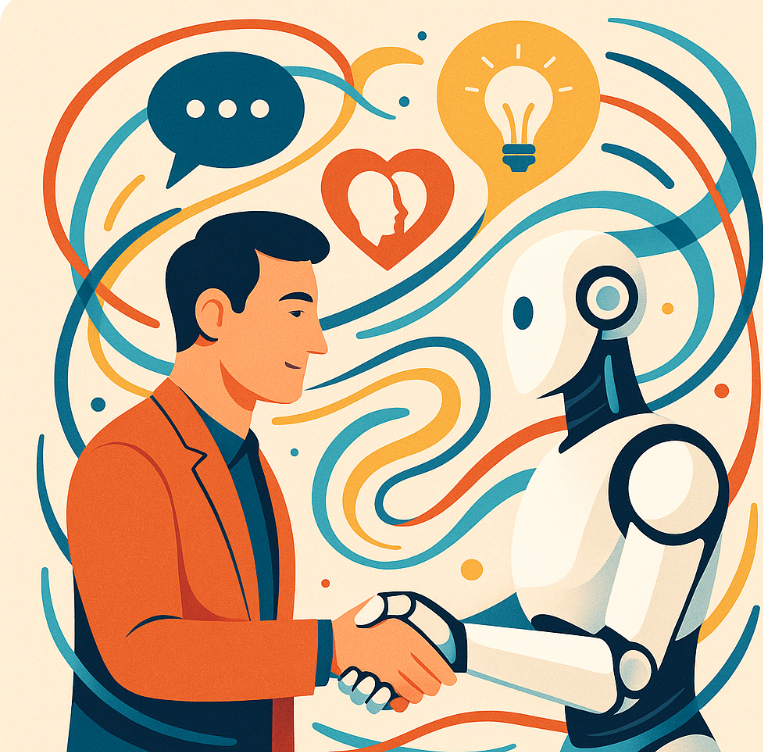
In the late 2020s, Maya—an early‑career marketing analyst—sat in a meeting that would change the arc of her profession. Her company’s board had just approved an AI‑driven analytics engine capable of generating campaign reports, designing ads and even writing press releases. Maya watched as the software drafted a polished blog post in seconds. Around the table, anxiety crackled. Some colleagues whispered about lay‑offs; others wondered if they could learn to use the tool. An older mentor leaned over and said, “This will eliminate tasks, but it will never replace your judgment or your empathy.” That comment became Maya’s north star. While the automation did indeed absorb much of her routine workload, she found that the most valuable parts of her job—shaping narratives, understanding clients’ emotional needs and rallying her team around new ideas—grew more important. Her future depended not on competing with machines but on doubling down on durable skills.
AI’s Impact on Employment
The promise and peril of artificial intelligence have moved from research labs into boardrooms and factories. JPMorgan Chase CEO Jamie Dimon has warned that AI will eventually eliminate some jobs and urged workers to develop skills that machines cannot easily replicate . In a December 2025 interview he noted that AI could make society more prosperous but insisted that critical thinking, communication and emotional intelligence will become the differentiators in an AI economy . His advice echoes a broader consensus: automation will change, rather than abolish, work.
How large is that change? The World Economic Forum’s (WEF) Future of Jobs 2025 report projects that structural labour‑market transformations will create about 170 million new jobs and displace about 92 million by 2030 . This net growth of roughly 7 % masks significant churn: the report estimates that 39 % of workers’ existing skill sets will be transformed or become obsolete between 2025 and 2030 . Employers expect demand to surge for Big‑Data specialists, AI engineers and renewable‑energy roles , while clerical and secretarial positions—cashiers, bank tellers and data‑entry clerks—are predicted to decline sharply .
Entry‑level positions are particularly vulnerable. The WEF notes that AI could replace more than 50 % of tasks performed by market‑research analysts and sales representatives . Consequently 40 % of employers plan to reduce staff where AI can automate tasks . McKinsey’s analysis of the U.S. labour market suggests that activities accounting for up to 30 % of hours currently worked may be automated by 2030 and predicts that up to 12 million U.S. workers will need to transition into new roles . Technology’s greatest short‑term impacts will fall on office support, customer service and food‑service roles ; however, it is also accelerating demand in healthcare, STEM and green‑energy sectors .
What Makes a Skill “Durable”
Against this backdrop of rapid change, educators and business leaders are talking about durable skills—sometimes called human‑centric or soft skills. The Harvard Division of Continuing Education describes durable skills as the nimble thinking and interpersonal abilities that withstand technological shifts. Professionals must cultivate critical thinking, inspire others and nurture creativity to remain competitive . The same blog notes that even as AI and machine‑learning roles grow, employers still rank analytical and creative thinking above technical proficiencies .
Key durable skills include:
- Analytical and critical thinking. Employers see analytical thinking as the most essential core skill for 2025 . Critical thinkers question assumptions, evaluate evidence and weigh trade‑offs.
- Creative thinking and problem solving. Creativity involves connecting disparate ideas and generating novel solutions. The WEF lists creative thinking among the fastest‑rising skills alongside curiosity and lifelong learning .
- Resilience, flexibility and adaptability. The WEF notes that trends such as inflation and climate change increase demand for resilience, flexibility and agility . These skills enable workers to pivot in uncertain environments.
- Leadership and social influence. Leading teams, motivating people and managing change are becoming more valuable as organizations adopt AI .
- Communication and emotional intelligence. Harvard experts stress that the ability to harness others’ energies, listen deeply and empathize is foundational for success . Machines can generate text, but they lack empathy and moral judgment.
- Curiosity and lifelong learning. As the pace of change accelerates, staying relevant requires continuous upskilling and willingness to learn .
These skills are “durable” because they cut across industries and persist even as tools evolve. They are rooted in human cognition, ethics and social dynamics—domains that technology does not master. As Jamie Dimon notes, AI may handle tasks, but people decide what frame matters and when rules should bend .
Why Durable Skills Matter More Now
AI augments rather than replaces human judgment. At a Fortune Brainstorm AI conference, leaders observed that while AI agents can automate routine creative tasks, workers will transition from producers to directors—setting objectives and delegating tasks to AI . As AI raises the floor of capability, it also raises the ceiling; workers can devote more time to higher‑order creative work . Durable skills—strategic thinking, narrative framing and emotional intelligence—enable people to coordinate AI agents and interpret outputs.
Durable skills differentiate talent in an automated world. McKinsey researchers highlight that generative AI will reshape labour demand by automating up to 30 % of work hours, but it will also enhance the work of STEM, creative and business professionals rather than eliminate their jobs . Workers in lower‑wage occupations may need to shift roles more frequently , making adaptable skills crucial. Similarly, the WEF warns that entry‑level roles could contract as companies offload grunt work to AI , intensifying competition for the remaining positions .
Durable skills anchor ethical and social decision‑making. As AI enters law, healthcare and finance, ethical questions abound. Who is accountable for an AI‑generated loan denial? How do we balance automation with privacy? Ethical reasoning and empathy—skills inherently human—become indispensable. Harvard educators argue that feelings will impact outcomes; ignoring them will lead to poor solutions .
Cultivating Durable Skills
- Practice reflective thinking. Ask why a decision is being made, not just how. Tools like the “Five Whys” or structured debate can sharpen analytical skills. Seek out complex problems that require synthesis across disciplines.
- Exercise creativity. Embrace divergent thinking: brainstorm many ideas before narrowing them. Engage with art, literature or cross‑cultural experiences to widen your mental repertoire. Creativity thrives when you expose your mind to unrelated domains.
- Develop emotional intelligence. Listen actively, observe nonverbal cues and consider others’ perspectives. Empathy enhances collaboration and conflict resolution. Practice by seeking feedback on your interpersonal interactions.
- Communicate with purpose. Clear communication means translating complex ideas into stories that resonate. Learn to tailor your message for different audiences and mediums. The ability to persuade and inspire cannot be automated.
- Embrace lifelong learning. Commit to continuous education through courses, reading and mentorship. The WEF reports that 59 % of workers will need training by 2030 , and 85 % of employers plan to prioritize upskilling . Schedule regular learning time and engage with communities that challenge you.
- Lead with ethics. Understand the moral implications of AI and advocate for responsible use. Familiarize yourself with data‑privacy principles and algorithmic bias. Leaders who can frame ethical discussions will be vital in shaping policy and corporate culture.
Takeaways
The narrative that AI will take over our jobs simplifies a complex transition. Automation is undeniably accelerating—large language models can draft reports, design images and answer customer queries. Yet the research shows that while many tasks will be automated, jobs will evolve rather than disappear. The net effect, according to the WEF, is job growth combined with skill instability . Workers like Maya who invest in durable skills—analytical thinking, creativity, resilience, leadership and empathy—will not only survive but thrive. They will orchestrate AI tools, navigate ambiguity and anchor decision‑making in human values. AI may be the engine of tomorrow’s economy, but durable skills will be its steering wheel.
References
- Jamie Dimon warns that AI will eliminate jobs and urges workers to develop critical thinking, communication and emotional intelligence .
- World Economic Forum Future of Jobs Report 2025 – structural labour‑market transformations will create 170 million new jobs and displace 92 million by 2030; 39 % of skills will be transformed .
- WEF report – growth in technology‑related roles; decline of clerical and secretarial positions .
- WEF article on entry‑level jobs – AI could replace more than 50 % of tasks in some entry‑level roles; 40 % of employers expect to reduce staff where AI can automate tasks .
- McKinsey: generative AI could automate up to 30 % of hours worked in the U.S. economy by 2030 ; about 12 million U.S. workers may need to change occupations .
- Harvard Division of Continuing Education – technology will eliminate many jobs, but nimble leaders with durable skills will stay relevant ; analytical and creative thinking ranked above technical skills .
- Harvard educators emphasise the importance of adaptability and empathy; feelings and human relationships influence outcomes .
- WEF report – analytical thinking remains the most sought‑after skill; resilience, flexibility and agility are rising; creative thinking, curiosity and lifelong learning are key .
⠀
Discover more from RETHINK! SEEK THE BRIGHT SIDE
Subscribe to get the latest posts sent to your email.