
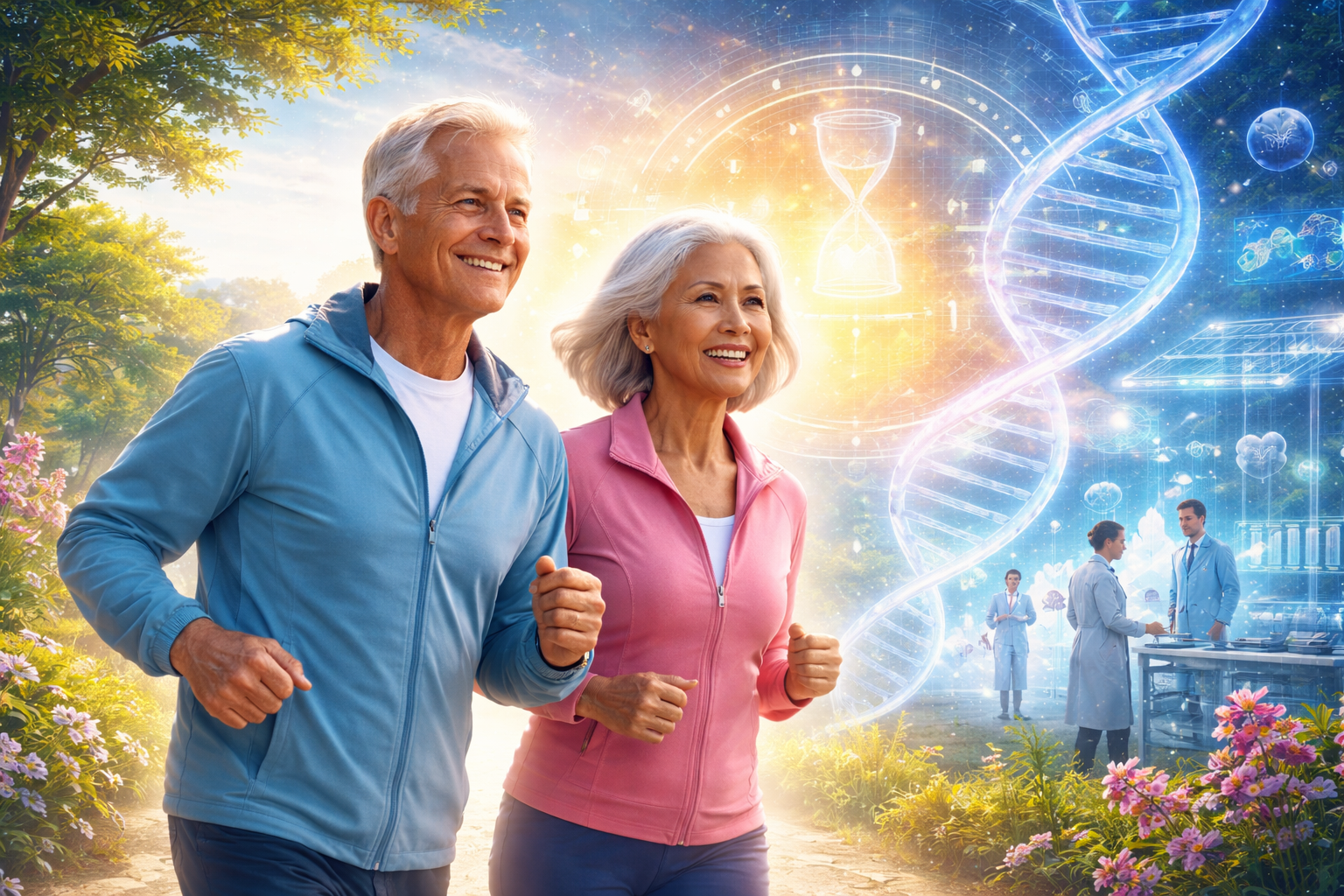
The real cause of death varies, but Nature’s design of life is to thrive, reproduce, and die.
Aging is a biological process shared by all living organisms. From an evolutionary standpoint, natural selection favors traits that improve survival until reproduction rather than maintenance afterward, which is why most organisms “live fast and die young” . Modern medicine and public‑health advances have dramatically increased the number of people who reach old age, yet maximum lifespan has changed little; hence age‑related diseases now dominate global mortality. Research into geroscience—the biology of aging—suggests that targeting the underlying mechanisms of aging could delay multiple chronic diseases simultaneously. This article examines the science behind aging, emerging technologies aimed at extending lifespan and healthspan, and the lifestyle choices that may add healthy years to life.
Why Aging Matters
The biology of aging
Aging is not a single disease but a progressive decline in physiological function. Researchers have identified several hallmarks of aging: genomic instability, epigenetic alterations, telomere attrition, loss of protein homeostasis, dysregulated nutrient sensing, mitochondrial dysfunction, cellular senescence, stem‑cell exhaustion, and altered intercellular communication. These hallmarks interact to create a biological environment in which disease thrives. For example, accumulation of senescent cells—cells that no longer divide but secrete pro‑inflammatory molecules—drives tissue deterioration. Mitochondrial dysfunction reduces energy supply, while chronic inflammation contributes to cardiovascular disease, cancer, and neurodegeneration.
Slowing improvements in life expectancy
Worldwide life expectancy has more than doubled over the past century, yet recent analyses suggest that gains are plateauing. A study of populations in high‑income countries found that average life expectancy improvements have slowed, and that pushing average life expectancy to 110 years would require curing most major causes of death. Researchers concluded that substantial gains in lifespan are unlikely without slowing biological aging. Therefore, the focus of geroscience is to target aging itself rather than treating individual diseases one by one.
Emerging Technologies and Interventions
Artificial intelligence and data‑driven medicine
Artificial intelligence (AI) and machine learning are revolutionizing longevity research. Advanced algorithms analyze large datasets of genomic, proteomic, and epigenetic information to identify biomarkers of biological age and predict disease risk. According to a 2025 review, AI methods help discover longevity‑related genes, assess biological age, accelerate drug discovery, and optimize genomic editing technologies like CRISPR. AI also aids personalized nutrition and medication plans, tailoring interventions to individual biology and lifestyle. However, researchers caution that ethical concerns such as data privacy, algorithmic bias, and equitable access must be addressed as these technologies advance.
Chemical and partial cellular reprogramming
Cellular reprogramming involves resetting adult cells to a more youthful state. In 2025, scientists reported that a cocktail of two small molecules could reverse multiple hallmarks of aging in the roundworm C. elegans, improving genomic stability, reducing senescence and oxidative stress, and increasing median lifespan by more than 42 %. This chemical reprogramming offers a non‑genetic strategy for rejuvenation and could complement gene‑therapy approaches. Partial reprogramming using transient expression of Yamanaka factors has also been shown to improve tissue function and extend lifespan in mice, though the risk of cancer remains a concern. Ongoing studies aim to optimize protocols that rejuvenate cells without erasing their identity.
Senolytics and senomorphics
Senescent cells accumulate with age and secrete a harmful senescence‑associated secretory phenotype (SASP) that drives inflammation and tissue dysfunction. Senolytics are drugs that selectively kill senescent cells, while senomorphics suppress the SASP without killing the cells. A 2025 narrative review noted that targeting cellular senescence holds promise for treating age‑related diseases, and that lifestyle interventions such as calorie restriction and exercise modulate senescence pathways. Combining senolytics, senomorphics, and healthy behaviors may therefore provide a comprehensive strategy for improving healthspan. Several senolytic compounds (e.g., dasatinib plus quercetin) are in early clinical trials, and researchers are developing biomarkers to identify patients who could benefit from these therapies.
Advanced gene therapies and genomics
Gene‑editing technologies like CRISPR‑Cas9 offer unprecedented control over the genome. Scientists are exploring ways to repair mutations, enhance DNA repair mechanisms, and insert protective genes that slow aging. Epigenetic editing—a technique to modify gene expression without changing DNA sequence—could reset gene regulatory networks to a younger state. Future therapies may combine gene editing with AI‑predicted targets to personalize interventions. Although these approaches are promising, safety and ethical issues (off‑target effects, germline editing, equitable access) remain significant hurdles.
Personalized supplements and nutraceuticals
Beyond pharmaceuticals, companies are developing nutraceuticals and supplements that target molecular pathways of aging. Compounds like NAD⁺ precursors (nicotinamide riboside), sirtuin activators (resveratrol), and rapamycin analogs are being studied for their effects on longevity pathways such as mTOR and AMPK. While some show benefits in animal models, evidence in humans is limited, and long‑term safety is unclear. Individuals should consult healthcare professionals before taking supplements and prioritize lifestyle changes first.
Lifestyle Strategies to Extend Healthspan
Scientific evidence suggests that up to 75 % of lifespan variability is determined by lifestyle and environmental factors, while genetics accounts for only about 25 %. The following interventions offer accessible ways to improve healthspan and potentially longevity.
Physical activity
Regular exercise is one of the most potent anti‑aging interventions. A study from Harvard found that meeting federal physical activity guidelines—150 to 300 minutes of moderate activity or 75 to 150 minutes of vigorous activity per week—reduces the risk of early death by up to 21 %, while doing two to four times the minimum reduces risk by up to 31 %. Exercise improves cardiovascular health, insulin sensitivity, muscle mass, and cognitive function. Both aerobic and resistance training are important; even simple activities like brisk walking, dancing, or cycling contribute to healthspan. Incorporating movement throughout the day, rather than sitting for long periods, further reduces risk.
Nutrition: plant‑based and Mediterranean diets
Diet plays a critical role in longevity. Researchers note that people who follow plant‑based or Mediterranean diets—rich in fruits, vegetables, whole grains, legumes, fish, and healthy fats like olive oil—have lower risks of chronic diseases and longer lifespans. A Harvard study found that women adhering to a Mediterranean diet had a 23 % lower risk of death than those who did not. These diets provide antioxidants, polyphenols, fiber, and unsaturated fats that combat oxidative stress and inflammation, and they support a diverse gut microbiome which influences immune function and metabolic health.
Calorie restriction (reducing calorie intake without malnutrition) extends lifespan in many species by activating stress‑response pathways such as sirtuins and AMPK, and improving metabolic efficiency. While long‑term caloric restriction in humans remains controversial, some advocate intermittent fasting or time‑restricted eating to harness similar benefits. More research is needed to balance benefits with potential risks like nutrient deficiencies.
Sleep and stress management
Adequate sleep and stress reduction are essential for cellular repair, cognitive health, and immune function. The U.S. National Institute on Aging recommends seven to nine hours of quality sleep per night and notes that controlling blood pressure through exercise, diet, and medication reduces the risk of cognitive decline. Chronic stress accelerates biological aging via hormonal pathways and can impair the immune system. Mind‑body practices such as meditation, yoga, deep breathing, and spending time in nature help reduce stress and support mental health. Social connections and purpose also contribute to longevity; isolation and loneliness are associated with higher mortality.
Monitoring and preventative care
Regular health screenings and proactive management of risk factors (blood pressure, cholesterol, glucose) prevent or delay chronic diseases. The National Institute on Aging advises keeping vaccinations up to date, following recommended screening schedules, and treating conditions such as hypertension and diabetes to protect cognitive and physical health. Wearable devices and digital health apps can help track activity, sleep, heart rate, and other metrics, enabling individuals and clinicians to identify trends early and adjust interventions.
Epigenetic age reversal through lifestyle
A small but intriguing randomized trial in 2021 reported that an eight‑week program combining a plant‑forward diet, exercise, adequate sleep, stress management, and probiotic supplementation reduced participants’ biological age (measured by the DNA methylation clock) by an average of 3.23 years. Although larger studies are needed, the trial suggests that lifestyle changes can have measurable effects on biological aging markers and may partially reverse epigenetic age.
Putting It All Together
Scientific advances are painting a hopeful picture for longevity. Although life expectancy gains are slowing, breakthroughs in cellular reprogramming, senolytics, gene therapy, and AI‑driven precision medicine hold the potential to slow or reverse aspects of biological aging. These technologies aim not only to extend lifespan but to increase healthspan—the period of life free of chronic disease and disability.
However, the simplest and most accessible interventions remain lifestyle choices: regular physical activity, nutritious diets rich in plants and healthy fats, sufficient sleep, stress management, social engagement, and preventive healthcare. These habits improve quality of life now and may synergize with future therapies. As researchers caution, there is no “magic bullet” for immortality; rather, progress will likely come from combining multiple approaches—behavioral, pharmacological, and technological—to compress morbidity and extend the years we live in good health.
By staying informed about the science of aging, embracing healthy lifestyles, and advocating for equitable access to emerging longevity technologies, individuals can help shape a future where living longer also means living better.
Focus and Perspective
- Harvard T.H. Chan School of Public Health – “Life expectancy may be reaching upper limits—for now” (21 Oct 2024). In this Q&A, biologist William Mair explains that while average life expectancy has increased, maximum lifespan has not and the pace of gains is slowing; our bodies have not evolved to maintain themselves far beyond the current maximum, so more people living longer leads to a higher burden of age‑onset diseases . He notes that historical data suggest a “glass mortality floor,” but not a brick wall, and argues that slowing biological aging is key to radical life extension . He also describes how organisms respond to food scarcity by shifting energy toward maintenance, which extends lifespan .
- STAT News – “Wealthy nations might be reaching a life expectancy limit, study suggests — at least for now” (7 Oct 2024). This news report summarizes a Nature Aging study that analyzed data from 1990–2019 in countries with the longest‑lived populations. The study found that increases in life expectancy have slowed across these nations and that achieving an average life expectancy of 110 would require curing most major causes of death . It concludes that further gains are unlikely without interventions that slow biological aging .
- Harvard T.H. Chan School of Public Health – “Exercising more than recommended could lengthen life, study suggests” (29 Jul 2022). A large cohort study showed that meeting the federal physical‑activity guidelines (150–300 minutes of moderate activity or 75–150 minutes of vigorous activity per week) reduces the risk of early death by up to 21 %, and exercising two to four times the minimum reduces risk by up to 31 % .
- Harvard Health Publishing – “Longevity: Lifestyle strategies for living a healthy, long life” (25 Jun 2024). This health‑education article notes that genetics account for about 25 % of lifespan variability, while lifestyle and environment determine the rest . It recommends plant‑based and Mediterranean diets; women adhering closely to a plant‑based Mediterranean diet had a 23 % lower risk of death compared with those who did not . It also outlines physical‑activity guidelines (150 minutes of moderate or 75 minutes of vigorous exercise per week) and highlights other longevity‑promoting behaviors such as not smoking, limiting alcohol, getting 7–9 hours of sleep, staying hydrated, socializing and maintaining a positive outlook .
- U.S. National Institute on Aging – “Cognitive Health and Older Adults” (accessed 2025). This government resource advises older adults to take care of their physical health with regular screenings, management of chronic conditions, and a diet rich in nutrient‑dense foods; it emphasizes getting enough sleep (7–9 hours per night) . It notes that controlling high blood pressure through exercise, diet and medication reduces the risk of cognitive decline . The page also mentions evidence linking the Mediterranean and MIND diets to reduced dementia risk, although results are mixed .
- Neuroscience News – “Diet and Lifestyle Change Reverses Aging by Three Years in Eight Weeks” (27 May 2021). This report describes a randomized controlled trial in which a eight‑week program of dietary changes, exercise, stress management, improved sleep and probiotic/phytonutrient supplementation reduced participants’ biological age (measured by the Horvath DNAmAge clock) by 3.23 years . The treatment group’s DNAmAge decreased by an average of 1.96 years, compared with controls .
- MDPI Biomolecules – “Leveraging Artificial Intelligence and Modulation of Oxidative Stressors to Enhance Healthspan and Radical Longevity” (2025). This review notes that healthspan refers to the period of life free from chronic conditions; AI techniques such as machine learning and deep learning can analyze complex biological data, identify biomarkers of biological age, accelerate drug discovery and personalize medicine . The authors highlight AI‑guided genomic editing and robotics to support elderly care but caution that ethical concerns (privacy, equitable access and the social implications of extended lifespan) must be addressed .
- EMBO Molecular Medicine – “Chemical reprogramming ameliorates cellular hallmarks of aging and extends lifespan” (Aug 2025). Researchers found that chemical‑induced partial reprogramming using a two‑molecule cocktail improved key drivers of aging (genomic instability, epigenetic alterations, cellular senescence and oxidative stress) in aged human cells and significantly extended the lifespan and healthspan of C. elegans .
- Longevity Clinic Asia – “Aging is No. 1 Risk Factor for Almost All Chronic Diseases and Death” (Jun 2024). This educational piece explains that the 12 hallmarks of aging (including genomic instability, telomere attrition, deregulated nutrient sensing and chronic inflammation) interact in feedback loops to create a biological environment in which disease thrives . It notes that cardiovascular disease remains the leading cause of death, responsible for about 17.9 million deaths worldwide (≈32 % of all deaths) . The article also discusses geroscience’s goal of targeting aging mechanisms (e.g., with drugs like rapamycin and metformin and lifestyle interventions like caloric restriction and exercise) to prevent multiple diseases at once .
These references underpin the evidence and perspectives presented in the longevity article.
References
Barzilai, N., Crandall, J. P., Kritchevsky, S. B., & Espeland, M. A. (2016). Metformin as a tool to target aging. Cell Metabolism, 23(6), 1060–1065. https://doi.org/10.1016/j.cmet.2016.05.011
Fitzgerald, K. N., Hodges, R., Hanes, D., Stack, E., Chelladurai, S., Noutsios, C., … Szyf, M. (2021). Potential reversal of epigenetic age using a diet and lifestyle intervention: A pilot randomized clinical trial. Aging (Albany NY), 13(7), 9419–9432. https://doi.org/10.18632/aging.202913
Fitzgerald, K. N., Campbell, T., Makarem, S., Hodges, R., & Szyf, M. (2023). Potential reversal of biological age in women following an 8-week methylation-supportive diet and lifestyle program: A case series. Aging (Albany NY), 15(6), 1833–1839. https://doi.org/10.18632/aging.204602
Harvard T. H. Chan School of Public Health. (2024, October 21). Life expectancy may be reaching upper limits—for now. https://www.hsph.harvard.edu/news/features/life-expectancy-reaching-upper-limits/
Kennedy, B. K., Berger, S. L., Brunet, A., Campisi, J., Cuervo, A. M., Epel, E. S., & Sierra, F. (2014). Geroscience: Linking aging to chronic disease. Cell, 159(4), 709–713. https://doi.org/10.1016/j.cell.2014.10.039
López-Otín, C., Blasco, M. A., Partridge, L., Serrano, M., & Kroemer, G. (2013). The hallmarks of aging. Cell, 153(6), 1194–1217. https://doi.org/10.1016/j.cell.2013.05.039
López-Otín, C., Blasco, M. A., Partridge, L., Serrano, M., & Kroemer, G. (2023). Hallmarks of aging: An expanding universe. Cell, 186(2), 243–278. https://doi.org/10.1016/j.cell.2022.11.001
Mair, W. (2024). Interview in Life expectancy may be reaching upper limits—for now. Harvard T. H. Chan School of Public Health. https://www.hsph.harvard.edu/news/features/life-expectancy-reaching-upper-limits/
National Institute on Aging. (2024). Cognitive health and older adults. U.S. National Institutes of Health. https://www.nia.nih.gov/health/cognitive-health-and-older-adults
Pierce, M., Silverwood, R. J., Nitsch, D., et al. (2022). Association of physical activity with mortality across adulthood. JAMA Internal Medicine, 182(9), 950–960. https://doi.org/10.1001/jamainternmed.2022.2521
Schoenfeldt, L., Paine, P. T., Picó, S., Kamaludeen, N. H. M., Phelps, G. B., Mrabti, C., … Ocampo, A. (2025). Chemical reprogramming ameliorates cellular hallmarks of aging and extends lifespan. EMBO Molecular Medicine, 17(8), 2071–2094. https://doi.org/10.1038/s44321-025-00265-9
Stat News. (2024, October 7). Wealthy nations might be reaching a life expectancy limit—at least for now. https://www.statnews.com/2024/10/07/life-expectancy-limits-aging/
World Health Organization. (2021). Cardiovascular diseases (CVDs): Fact sheet. https://www.who.int/news-room/fact-sheets/detail/cardiovascular-diseases-(cvds)
Zhang, Y., Desdín-Micó, G., Arnaoutoglou, E., et al. (2025). Leveraging artificial intelligence and modulation of oxidative stressors to enhance healthspan and radical longevity. Biomolecules, 15(11), 1501. https://doi.org/10.3390/biom15111501