
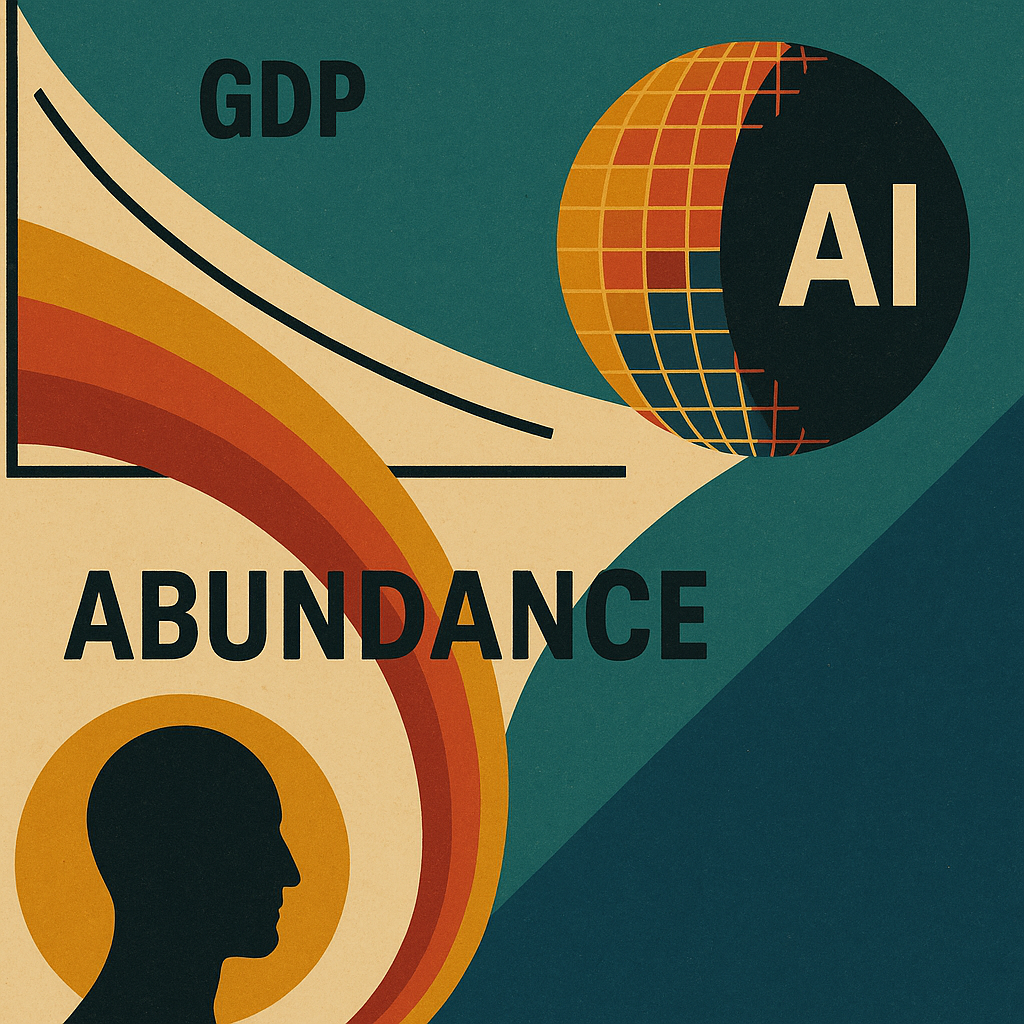
Introduction – from Precious Knowledge to Digital Abundance
For most of recorded history, knowledge was scarce and expensive. A few ruling elites and religious institutions controlled access to reading and learning. The printing press gradually broadened access, but physical books and encyclopedias remained costly. The Encyclopaedia Britannica ended its 244‑year print run in 2012; the final 32‑volume set sold for $1,400, while digital access cost $70 a year . The shift to digital encyclopedias, blogs and online databases has turned information into a near‑zero‑cost public good. Wikipedia alone generated 296 billion page views in 2024 and more than 24 billion page views per month, equivalent to almost 10,000 page views each second . This explosion of free knowledge illustrates a fundamental tension in capitalism known as Lauderdale’s Paradox: public abundance can shrink private markets and even reduce measured economic output. The demise of the printed encyclopedia industry appears in GDP as a loss, even though global access to knowledge has improved dramatically.
The Lauderdale Paradox and Scarcity in Capitalism
The 19th‑century economist Lord Lauderdale observed that public wealth increases when goods become plentiful and accessible, whereas private riches grow when goods are scarce and owned. Under capitalism, exchange value is created not by usefulness but by scarcity. A river that flows freely creates enormous public wealth; if a private company fences the river and charges for water, public wealth falls while private profits rise. Modern capitalism does not merely respond to scarcity; it manufactures it. Jason Hickel notes that capitalism relies on enclosure and commodification of essential goods and services – housing, health care, transport – to maintain artificial scarcity and maximize profits . When basic goods are privatized, people must work more simply to afford them, pushing aggregate production and growth . Scarcity thus serves as the “operating system” of capitalism. Companies destroy unsold goods, design products to fail early and defend intellectual property to keep markets tight. Workers, too, are kept in a state of economic insecurity to ensure a ready labour supply. This dependence on scarcity explains why free public goods like Wikipedia threaten established markets and appear to harm GDP.
The Wikipedia Effect – Abundant Knowledge and Negative GDP
The encyclopedia industry illustrates the paradox starkly. A Britannica set cost $1,400 , while online access costs a few dozen dollars or nothing at all. When Wikipedia and other open‑source repositories emerged, they destroyed the market for printed encyclopedias. According to Wikimedia statistics, its projects recorded 296 billion page views in 2024, with 24 billion page views per month . The English Wikipedia alone received 130 billion page views in 2024 . Millions of people now access information for free. This change produces enormous public wealth: higher literacy, rapid dissemination of scientific knowledge, and educational opportunities across the globe. Yet in GDP terms it registers as a loss, because revenue from selling encyclopedias disappears. GDP counts transactions, not wellbeing; it cannot capture the value created when information becomes abundant and non‑rival.
The Limits of GDP and Hidden Value
Gross domestic product measures the market value of final goods and services and remains the dominant yardstick for national performance. However, it has major limitations. First, intangible assets—software, branding, design, research—are often excluded from national accounts. A Federal Reserve study notes that published macroeconomic data exclude most intangible investment and estimate that around $800 billion of intangible investment was omitted from U.S. data in 2003, causing more than $3 trillion of business intangible capital stock to be left out of measured GDP . This omission understates productivity and misrepresents the modern knowledge economy. Second, GDP ignores a large informal or underground economy; cash and barter transactions for illegal or unrecorded goods are rarely captured . Third, it fails to account for environmental damage: producers can increase output by polluting or depleting natural resources, yet the associated costs are not deducted from GDP . Fourth, GDP overlooks improvements in product quality; consumers may derive more utility from better smartphones or faster computers without a proportional price increase, but these quality gains are not reflected . Finally, it ignores non‑market production such as home‑grown food or self‑generated electricity . Together, these omissions mean that GDP systematically undercounts public wealth and overvalues activities that generate private profit at the expense of long‑term wellbeing.
New Measures for an Abundant Age
Recognising the shortcomings of GDP, economists and governments have proposed alternative metrics better suited to an era of abundance:
- Human Development Index (HDI): Developed by the United Nations, the HDI emphasises people and capabilities rather than output. It measures health (life expectancy), education (years of schooling) and standard of living (gross national income per capita) . It combines these dimensions into a composite index, offering a broader view of development. However, it still relies heavily on income and omits inequalities and empowerment .
- Better Life Index (BLI): Created by the OECD, the BLI compares material conditions and quality‑of‑life topics—housing, income, jobs, community, education, environment, governance, health, life satisfaction, safety and work‑life balance—across 41 countries . Its interactive design allows users to weight categories according to personal priorities , but the index lacks time‑series comparability and covers only a fraction of nations .
- Genuine Progress Indicator (GPI): Instead of counting all spending as a positive contribution, the GPI includes economic, social and environmental factors. It subtracts costs such as pollution and crime and adds values like volunteering and higher education . States like Hawaii, Maryland and Vermont have begun reporting GPIs, yet critics argue that assigning values to social variables can be subjective .
These indices reveal that public goods and social wellbeing matter, even if they do not generate profits. They also highlight the need to include environmental stewardship and unpaid labour in our conceptions of progress.
Psychological and Cultural Mismatch – Stone‑Age Minds in a Digital World
Technological abundance confronts not only economic metrics but also human psychology. Evolutionary psychologists describe a phenomenon called evolutionary mismatch: our brains and bodies evolved in small hunter‑gatherer groups, yet we now navigate anonymous, densely populated, digitally dependent societies. As Ronald Giphart and Mark van Vugt explain, evolutionary mismatch occurs when the environment changes faster than our species can adapt, leaving organisms poorly suited to the new conditions . Humans are still tuned to the environment of evolutionary adaptation, facing immediate threats like famine and predators . In modern contexts, those survival mechanisms manifest as chronic anxieties about employment, status and information overload. We crave calorie‑dense foods and respond to social media stimuli because our Stone‑Age brains are wired to prioritize scarcity and urgent signals. This mismatch helps explain why moving from a scarcity‑based economic mindset to an abundance paradigm feels unsettling; our stress responses are calibrated for short‑term dangers, not for managing abstract, long‑term uncertainties.
AI and the Future of Work – Displacement, Augmentation and Skills Earthquakes
The rise of artificial intelligence is the clearest sign that we are entering an era of cognitive abundance. AI automates tasks rather than entire jobs, creating a dynamic interplay between human labour and machine capabilities. MIT’s Iceberg Index creates a digital twin of the U.S. labour market to assess what AI could economically perform. The 2025 study finds that current AI systems could take over tasks tied to 11.7 % of the U.S. labour market—about $1.2 trillion in wages—by matching AI capabilities to 151 million workers, more than 32,000 skills and 923 job types across 3,000 counties . Importantly, the researchers emphasise that this figure reflects technical feasibility, not a prediction of imminent job losses . In many cases AI adoption is still too expensive or impractical to replace human workers .
Evidence suggests that AI can augment rather than destroy employment. PwC’s 2025 Global AI Jobs Barometer, based on nearly a billion job advertisements, reports that wages are growing twice as fast in industries most exposed to AI . Jobs requiring AI skills command a 56 % wage premium, more than double the 25 % premium in the previous year . Productivity has nearly quadrupled in the most AI‑exposed industries since the proliferation of generative AI, and revenue per employee in these sectors is three times higher than in less exposed industries . Job numbers are rising even in highly automatable occupations; both automatable and augmentable roles grew between 2019 and 2024 . Moreover, the skills demanded in AI‑exposed jobs are changing 66 % faster than in other roles . These findings corroborate the World Economic Forum’s forecast that while 85 million jobs may be displaced by 2025, 97 million new roles—such as AI systems managers and ethics officers—will emerge .
The data paint a nuanced picture: AI exposure accelerates wage growth and creates new opportunities, but it demands continuous learning and adaptability. The rapid pace of change also risks regional disparities, as highly exposed sectors cluster in certain cities or counties. Entry‑level roles may shrink, widening the gap for young workers. Without deliberate policies, AI could exacerbate inequality even as it expands productivity.
Navigating the Transition – Policy and Cultural Change
Abundance is not self‑executing; political and institutional choices will determine whether it yields widespread prosperity or entrenched inequality. Several strands of thinking are emerging:
- Universal Public Services and Decommodification – Hickel argues that essential goods—health care, education, housing, transport—should be decommodified. He notes that capitalism keeps these goods scarce through private enclosure, compelling people to work more and causing needless production . Universal public services would eliminate artificial scarcity, lower living costs and decouple well‑being from waged labour . They also facilitate rapid decarbonisation and reduce ecological pressures .
- Universal Basic Income and Basic Services – Some economists propose providing a baseline income or free access to essential services, ensuring everyone benefits from the productivity gains of AI and automation. A secure floor would allow people to pursue education, creativity, caregiving and community projects without fear of destitution. Experiments in Alaska and various pilot programmes suggest that cash transfers can reduce poverty and improve health outcomes.
- Reforming Intellectual Property and Market Structures – Patents and copyrights create artificial scarcity around medicines, software and cultural products. Reforming these regimes—e.g., by mandating open licensing for publicly funded research—would accelerate the diffusion of innovations and prevent monopolistic rent extraction.
- Alternative Economic Metrics and Planning – Adopting measures such as HDI, BLI and GPI in public policy would align economic planning with human and ecological wellbeing. They would justify investments in public goods like clean air, education and digital infrastructure even if these activities do not boost GDP.
- Education and Lifelong Learning – Because AI accelerates skill change, governments and employers must invest in continuous education. Emphasis on creativity, critical thinking and social skills will allow workers to complement AI rather than compete with it.
⠀
Conclusion – Choosing What We Value
The sense of impending catastrophe that accompanies the transition to abundance is not irrational. It reflects the collision between an old system built on scarcity and a new world of potential abundance. GDP mismeasures progress because it values scarcity and market transactions; it ignores the immense public wealth created by free knowledge, open‑source software, clean air and healthy communities. The Lauderdale Paradox warns that without deliberate action, private profit motives will continue to undermine public wealth. To navigate this transition, we must rethink what we measure, what we reward and how we organise our institutions. Universal public services and alternative measures like the HDI, BLI and GPI offer frameworks for distributing abundance fairly and sustainably. At the same time, we must recognise our psychological predispositions: our Stone‑Age brains will take time to adapt to a world where survival is not constantly at stake. The future of work will be defined not by mass unemployment but by human‑AI collaboration, ongoing reskilling and new forms of purpose. Ultimately, the question is not whether abundance is possible—it clearly is—but who will benefit and how we will redefine progress when scarcity is no longer the foundation of value.
References
Britannica. (2012, March 14). End of an era: Encyclopaedia Britannica going out of print. ABC News. https://abcnews.go.com
Corporate Finance Institute. (2023). Gross domestic product (GDP): Definition, components, and limitations. https://corporatefinanceinstitute.com
Hickel, J. (2020). Universal public services: The power of decommodifying survival. Degrowth.info. https://degrowth.info
MIT Economics. (2024). The iceberg index: Task-level exposure to AI in the U.S. economy. Massachusetts Institute of Technology.
Psychology Today. (2024). How our Stone Age brains struggle in the modern world. https://www.psychologytoday.com
PwC. (2025). Global AI jobs barometer. PricewaterhouseCoopers. https://www.pwc.com
St. Louis Federal Reserve. (2023, April). Three other ways to measure economic health beyond GDP. St. Louis Fed. https://www.stlouisfed.org
United Nations Development Programme. (2023). Human Development Index (HDI). https://hdr.undp.org
Wikimedia Foundation. (2024). Facts & statistics: Wikimedia projects and global reach. https://wikimediafoundation.org
World Economic Forum. (2020). Future of jobs report 2020. World Economic Forum. https://weforum.org
World Economic Forum. (2024). Recession and automation: 85 million jobs displaced, 97 million created. World Economic Forum. https://weforum.org