
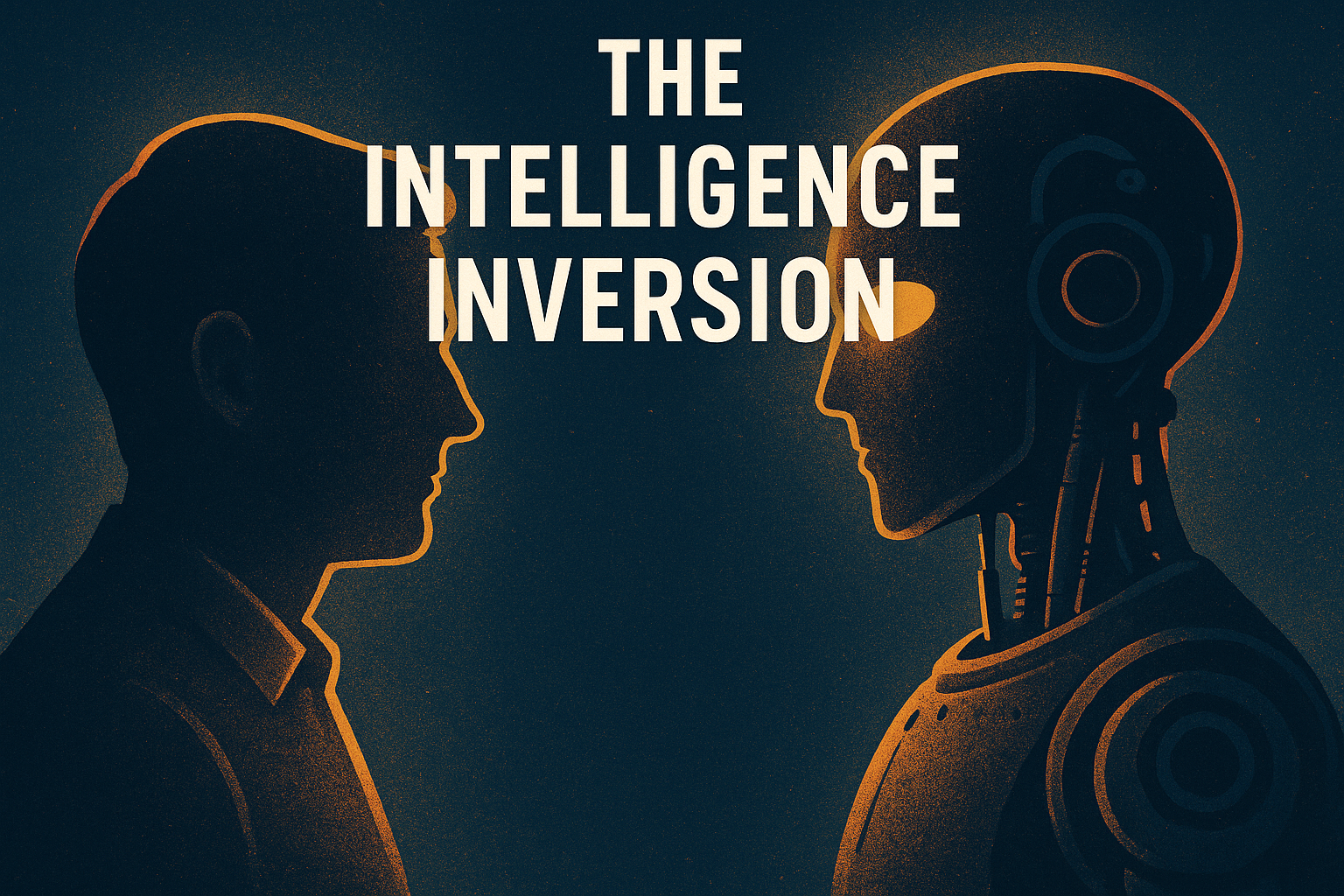
The Future of Work and Economics in the Age of AI: A Critical Examination of Emad Mostaque’s Predictions
In a recent conversation with Emad Mostaque—founder of Stability AI and now leader of the “Intelligent Internet” project—he made sweeping predictions about generative AI transforming the economy. He argued that within roughly 1,000 days (by mid‑2028) human cognitive labour would become economically worthless or even negative in value. Mostaque suggested that digital agents built on large‑language‑model (LLM) technology will perform intellectual work better, cheaper and faster than humans. As a result, companies will stop hiring; capital will move from traditional assets into data‑centre “GPU factories”; and concepts like money, work and value will need to be redefined. In response, he proposes an ambitious new monetary system—anchored to a finite supply of a “foundation coin” and a soft currency (“culture credits”) distributed to every human along with a personal AI.
The conversation is provocative, but it also raises questions. Do current data and economic research support the idea that human cognitive work will become worthless by 2028? Is universal basic income (UBI) impossible, and are new currencies anchored to compute plausible? Are we really discovering “the equations of reality” through generative AI? This essay critically examines Mostaque’s claims using evidence from economic research, surveys, labour statistics and technology cost trends. It argues that while AI is transforming productivity and will reshape labour markets, the trajectory is more nuanced than “human cognitive work goes negative.”
1 Generative AI adoption and productivity: evidence so far
The past three years have seen a rapid uptake of generative AI. A nationally representative Real‑Time Population Survey conducted by Alexander Bick, Adam Blandin and David Deming shows that adoption of generative AI climbed from 44 % in August 2024 to 54.6 % of U.S. adults by mid‑2025 . Early‑career individuals use these tools heavily: the same survey found that nearly 23 % of employed respondents had used generative AI for work at least once in the previous week, and 9 % used it daily .
Researchers expect that generative AI will boost productivity in two main ways. First, by making knowledge workers more efficient, which raises output per worker. The Brookings Institution explains that, in economic models, a productivity boost has a proportionate effect on aggregate output: if generative AI makes cognitive workers 30 % more productive and cognitive tasks make up about 60 % of value added in the economy, aggregate productivity would increase by roughly 18 % . Second, generative AI can accelerate innovation—research and development, new product introduction, management improvements—which raises the rate of productivity growth. A 20 % improvement in the productivity of cognitive labour could lift the long‑run productivity growth rate from 2 % to 2.4 %, and though such a change seems small initially, compounding would make the economy about 5 % larger after a decade .
Early experiments support substantial productivity gains. A study of software developers using OpenAI’s Codex found that developers completed tasks up to two times faster . The OECD expects that AI could raise labour productivity in G7 countries by 0.2 – 1.3 percentage points per year over the next decade . These improvements are meaningful: even half a percentage point per year yields large increases in national income over time.
However, researchers also caution that productivity benefits take time to materialise. The “productivity J‑curve” described by Erik Brynjolfsson and colleagues notes that general‑purpose technologies require complementary investments—in business processes, training and organisational change—before productivity rises . Rolling out AI across firms will not be instantaneous, especially for small and medium enterprises that lack expertise or capital. Thus, while generative AI adoption is widespread and the potential productivity effects are large, a full transformation may take years.
2 Job displacement: an uneven but real phenomenon
Mostaque argues that human cognitive labour will not only lose its economic value but actually become negative—companies will pay to avoid humans because AI is faster and error‑free. Current evidence shows a more nuanced picture.
A 2025 working paper by Brynjolfsson, Chandar and Chen leverages payroll data from millions of U.S. workers to study early AI effects. They find that, since the adoption of generative AI, employment among 22‑ to 25‑year‑olds in the most AI‑exposed occupations (e.g., software development, customer service) fell 13 % relative to less exposed occupations . By contrast, employment for older workers in the same occupations and for workers in less exposed jobs remained stable . The study concludes that employment declines are concentrated in occupations where AI is likely to automate tasks, whereas occupations where AI augments workers see little decline .
Official labour statistics confirm that AI contributes to some job losses. Outplacement firm Challenger, Gray & Christmas tracks reasons for job cuts. In September 2025, they reported 17,375 job cuts explicitly attributed to artificial intelligence and another 20,219 cuts due to technological updates that likely include AI . Yet these numbers are a small fraction of overall labour market churn; total separations in August 2025 were 5.1 million . The Economic Innovation Group found no significant nationwide increase in unemployment due to AI .
The data suggest that AI job displacement is occurring but is concentrated: entry‑level and routine cognitive tasks are most exposed, while many other jobs are stable or even growing. Mostaque’s scenario—where all cognitive jobs become negative-value within three years—appears unsupported by current evidence. Moreover, many jobs include physical, social or creative components that are harder to automate. Even strong AI systems like OpenAI’s GPT‑4 show limitations in reasoning, up‑to‑date knowledge and reliability; they are most powerful when paired with human oversight.
3 Why AI adoption does not mean cognitive labour becomes worthless
Mostaque’s prediction rests on three assumptions: (1) AI token costs will collapse, making AI essentially free; (2) agentic AI will autonomously perform complex tasks; and (3) capital owners will therefore replace all cognitive workers. Each assumption has some basis but also major uncertainties.
3.1 Token costs and the economics of AI
Compute costs for AI are falling quickly. Data from corporate payment‑card company Ramp show that in April 2025 businesses paid about $2.50 per million tokens for AI services, down from $10 per million tokens a year earlier—a 75 % decrease . Competition and efficiency improvements drive these declines . However, overall AI costs include more than inference tokens: developing and deploying bespoke models require specialised engineers, training data, integrations and security.
Moreover, new AI capabilities often consume more tokens. “Long‑context” models or multi‑modal agents use hundreds of millions of tokens per task. Thus, even as per‑token prices fall, total usage can increase, and businesses may still face large bills. There is also no guarantee that costs will continue to collapse at a 100× per year rate; hardware supply constraints, energy costs and demand for specialised chips may slow the decline. The U.S. leads the world in high‑end AI compute capacity but its lead narrows when adjusted for population; access remains limited for small firms .
3.2 Agentic AI and the state of the technology
Research is advancing toward “agentic” systems that can plan, autonomously act and verify results. OpenAI’s Assistant API and Anthropic’s Claude agents can already execute simple workflows (e.g., summarising emails, drafting code) but still require human prompts and monitoring. Building reliable digital twins that replace knowledge workers across tasks will require major advances in long‑term reasoning, up‑to‑date situational awareness and alignment.
The current evidence suggests augmentation rather than wholesale replacement. Many firms use generative AI to increase worker productivity rather than to replace workers. For instance, a survey by the OECD found that AI adoption is associated with higher productivity but has insignificant marginal effects on employment when controlling for other technology use . Another study shows that generative AI access reorients lower‑skilled workers toward more productive tasks, thereby reducing productivity gaps .
3.3 Demand for human attributes
Mostaque emphasises that economic value will shift from skills to attention and network effects, because AI will provide near‑zero‑cost intellectual outputs. Indeed, human attention is scarce, and network‑mediated value (e.g., social capital, trust) could become more important. But it does not follow that cognitive labour as a category will have negative value. Even in industries with high automation—such as advanced manufacturing—humans manage machines, design processes and ensure quality. Jobs requiring empathy, judgement, leadership and ethical responsibility remain in demand. The Brookings article notes that generative AI may enable cognitive workers to produce deeper analyses and new ideas, but those outputs are not easily captured in GDP statistics . Thus, measuring the value of cognitive work might become harder, yet its contribution to societal welfare could remain substantial.
4 Rethinking social safety nets: UBI and alternative proposals
Mostaque argues that tax‑funded UBI is mathematically impossible because a poverty‑level payment to every American would exceed the entire federal tax base. It is true that generous universal payments are expensive: the UBI Center estimates that a UBI of $1,000 per month for every person would cost about $4 trillion per year , roughly equal to the total U.S. federal revenue (≈$3.5 trillion) . The Center on Budget and Policy Priorities similarly notes that giving each American $10,000 per year would cost over $3 trillion annually—about three‑quarters of the entire federal budget—and would require historically unprecedented taxes . This does not mean any UBI is impossible: smaller or targeted programs may be affordable, and replacing some existing transfers with cash could lower net cost. But Mostaque is correct that funding a universal $16,000 annual payment via taxes alone would be extremely difficult.
His alternative—a dual‑currency system anchored to compute—raises more questions than it answers. He proposes a “foundation coin” with a finite supply (like Bitcoin) used to fund civic supercomputers for healthcare and education, and “culture credits” pegged to this coin and issued to verified humans as income. While creative, this system assumes that society will accept a privately designed currency as legal tender and that compute‑backed coin values will remain stable. Historical attempts to tie money to specific assets (e.g., the gold standard) faced volatility and liquidity problems. Moreover, computing infrastructure itself depends on global supply chains, energy access and geopolitical stability; tying the money supply to compute could introduce new vulnerabilities.
More pragmatically, many economists advocate strengthening existing safety nets and investing in training. For example, targeted wage subsidies, expanded earned income tax credits, portable benefits for gig workers, and universal health care can cushion workers in transition. In addition, active labour‑market policies—including reskilling programs and apprenticeship—can help workers move into complementary roles.
5 Compute as capital and geopolitics
Mostaque notes that billionaires are “buying data centres” because GPUs are the comparative advantage of the future. There is merit to this argument: AI development is capital‑intensive, and nations with abundant compute resources will lead in AI innovation. A 2025 Federal Reserve analysis notes that the United States controls about four times the high‑end AI compute capacity of its closest G7 peer . However, this advantage narrows when accounting for GDP or population, and small enterprises struggle to access compute . Other countries—particularly China—have invested heavily in AI data centres; some remain under‑utilised because of infrastructure or regulatory constraints.
Equating compute with capital overlooks other critical inputs. Data quality, algorithms, skilled labour, energy and regulatory environment all influence AI competitiveness. For example, high electricity prices in Europe are negatively correlated with AI adoption . Thus, while compute is essential, balanced investments in human capital, data governance and infrastructure matter for competitiveness.
6 AI, physics and the nature of reality
Perhaps the most philosophical part of Mostaque’s conversation is his assertion that generative AI shows we are “living in a simulation” and that the equations of generative AI are the equations of reality. There is a kernel of truth in the idea that deep learning exploits universal patterns. Diffusion models, transformers and gradient‑descent optimisation are effective because they capture statistical regularities in data. These techniques also appear in physics, economics and neuroscience. However, to infer from this that AI reveals the true “equations of the universe” is speculative.
Generative models compress human knowledge. Stable Diffusion can produce images from text because it learned correlations across billions of pictures, not because it knows how the world works. LLMs lack grounded understanding and struggle with causal reasoning. They are tools for pattern recognition and approximate reasoning; they do not derive fundamental laws. Whether the universe itself operates on digital computation remains an open question.
Nevertheless, AI research does have implications for our understanding of intelligence. Systems trained on vast datasets can exhibit emergent behaviours—like the ability to generate 3D structures or suggest novel protein folds. This suggests that intelligence might be more computable than previously thought. It also underscores the need for alignment: AI will optimise whatever objective we give it; designing those objectives to reflect human values is critical.
7 What becomes valuable when AI is cheap?
If cognitive work becomes commoditised, what retains value? Mostaque points to attention, network capital and meaning. The Brookings report notes that human attention is indeed scarce and is already monetised by platforms like Google and Meta . In a world with abundant synthetic content, curation and trust become more valuable. Artists, teachers and leaders who cultivate communities may thrive because their networks confer social capital that AI cannot replicate. Interpersonal care, empathy and creativity may command premiums.
At the same time, societies will need to reconsider how we measure value. Gross domestic product counts goods and services sold but assigns positive value to disease treatment and zero value to health itself. When AI cures diseases or performs unpaid labour (e.g., caregiving), standard measures may show declining economic activity despite rising welfare. Many economists propose supplementary indicators—like the Human Development Index, inclusive wealth or measures of social capital—to capture well‑being more accurately.
8 Conclusion: bridging utopia and caution
Emad Mostaque’s warnings and proposals highlight real challenges: generative AI will disrupt labour markets, accelerate productivity, and raise hard questions about distribution and meaning. His sense of urgency may help policymakers and the public recognise that technology is outrunning our institutions.
However, a careful look at the evidence suggests that his timeline is too aggressive and his conclusion that cognitive labour will become worthless is overstated. Generative AI adoption is high, and early‑career workers in exposed occupations are experiencing job declines . Yet overall employment is growing, displacement remains modest relative to total labour turnover , and many roles are being augmented rather than automated . Productivity gains are real but require complementary investments and will take time to appear . Token costs are falling , but the complexity of deploying AI means that intelligence is unlikely to become free.
Instead of abandoning current economic frameworks, policymakers should update them. They can strengthen social insurance, invest in education and training, encourage diffusion of AI tools across all businesses and monitor emerging labour impacts. Debates about UBI should be grounded in fiscal realities ; targeted cash transfers and portable benefits may be more viable. Competition policy may need to address compute concentration to ensure broad access .
Finally, society must engage with the ethical and philosophical questions AI raises. If AI becomes ubiquitous, what gives life meaning? How do we ensure that AI systems reflect diverse human values and do not reinforce inequalities? Building aligned AI—and institutions that manage it responsibly—will determine whether the coming decades deliver Mostaque’s “Star Trek”‑style abundance or a world of greater inequality and unrest. The answer will depend not only on technology but on collective choices about economics, governance and humanity’s role alongside increasingly capable machines.
References
- Arnon, A. (2025, September 8). The projected impact of generative AI on future productivity growth (Penn Wharton Budget Model Brief). Penn Wharton Budget Model. https://budgetmodel.wharton.upenn.edu/issues/2025/9/8/projected-impact-of-generative-ai-on-future-productivity-growth
- Baily, M. N., Brynjolfsson, E., & Korinek, A. (2023, May 5). Machines of mind: How generative AI will power the coming productivity boom. Brookings Institution. https://www.brookings.edu/?p=1687743&post_type=article&preview_id=1687743
- Bick, A., Blandin, A., & Deming, D. (2025, November 13). The state of generative AI adoption in 2025. On the Economy (Federal Reserve Bank of St. Louis). https://www.stlouisfed.org/on-the-economy/2025/nov/state-generative-ai-adoption-2025
- Brynjolfsson, E., Chandar, B., & Chen, R. (2025). Canaries in the coal mine? Six facts about the recent employment effects of artificial intelligence (Working paper). Stanford Digital Economy Lab. https://digitaleconomy.stanford.edu/publications/canaries-in-the-coal-mine
- Greenstein, R. (2019, June 13). Universal basic income may sound attractive but, if it occurred, would likelier increase poverty than reduce it. Center on Budget and Policy Priorities. https://www.cbpp.org/poverty-and-inequality/universal-basic-income-may-sound-attractive-but-if-it-occurred
- Kearney, M. S., & Mogstad, M. (2019). Universal basic income (UBI) as a policy response to current challenges (Policy memo). Aspen Institute Economic Strategy Group. https://www.economicstrategygroup.org/wp-content/uploads/2019/12/Maintaining-the-Strength-of-American-Capialism-Universal-Basic-Income-UBI-as-a-Policy-Response-to-Current-Challenges.pdf
- Ramp team. (2025, April 15). The cost of AI is decreasing. Ramp. https://ramp.com/velocity/ai-is-getting-cheaper
- Srikant, K. (2025, November 15). Fact check: Has AI already caused some job displacement? Econofact. https://econofact.org/factbrief/fact-check-has-ai-already-caused-some-job-displacement
- Hoynes, H. W., & Rothstein, J. (2019). Universal basic income in the United States and advanced countries (Working Paper No. 25538). National Bureau of Economic Research. https://doi.org/10.3386/w25538
- Wittenberg, C. (2025). Labeling AI-generated media online. Proceedings of the National Academy of Sciences, 122(x), e2402842121. (Cites Baily, Brynjolfsson, & Korinek, 2023, and summarizes productivity implications of generative AI.) https://www.ncbi.nlm.nih.gov/pmc/articles/PMC12166545
Discover more from RETHINK! SEEK THE BRIGHT SIDE
Subscribe to get the latest posts sent to your email.