
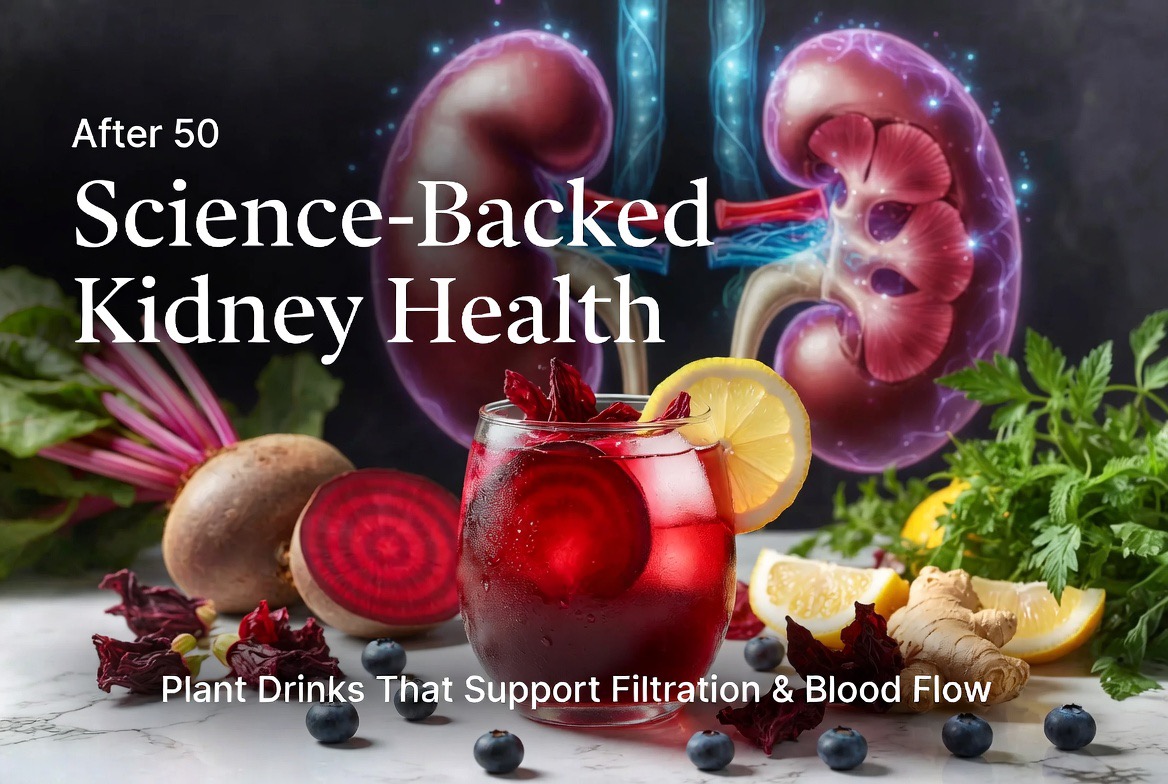
Science-Backed Plant Compounds and Daily Drinks to Protect Filtration and Blood Flow
Many people believe that losing kidney function after age 50 is just “normal aging.” Science shows this is not entirely true. While some decline happens. It is often accelerated by reduced blood flow to the kidneys. Oxidative stress damages the body through unstable molecules called free radicals. Silent chronic inflammation is a low-grade swelling that builds over years without obvious symptoms. Both factors also play a role. The good news? Specific plant compounds found in everyday drinks can help support kidney filtration. They improve tiny blood vessels (microcirculation) and protect delicate kidney structures. This exploration draws from the insights of Dr. William Li. He is a physician and researcher focused on food as medicine. It also draws from real evidence from journals like the Journal of the American Society of Nephrology. We will explain everything in plain language, with terms clarified in brackets.
Kidney function is measured by GFR. It stands for glomerular filtration rate. This is a number, usually 90–120 mL/min in healthy adults. It shows how well the kidneys’ tiny filters, called glomeruli, clean the blood. After about age 40–50, GFR often drops by roughly 0.4–1.07 mL/min per year in healthy people without high blood pressure. A 2024 systematic review in the Journal of Nephrology reports this finding. That works out to about 1% per year after 50 for many. By age 70–75, half of adults may have a GFR below 60. This raises risks for fatigue, swelling (edema), high blood pressure, and eventually chronic kidney disease (CKD – long-term kidney damage). But this is not inevitable. Lifestyle factors like poor circulation and inflammation speed it up far more than age alone.
The kidneys receive 20–25% of the heart’s blood output every minute – about one liter per minute. This blood flow is regulated in part by nitric oxide (NO). It is a short-lived gas molecule made by blood-vessel linings. It relaxes vessels so blood flows smoothly. When NO levels drop with age, diabetes, or high blood pressure, the kidneys’ filters get less oxygen and nutrients. Tiny blood vessels stiffen, filtration slows, and waste builds up. Studies in the American Journal of Hypertension show that boosting NO improves renal (kidney) blood flow. It also helps keep GFR stable. The body makes NO from the amino acid L-arginine. Dietary nitrates, which are natural compounds in certain vegetables, offer a shortcut. Mouth bacteria turn nitrates into nitrite. The body then converts nitrite to NO. This is especially true in low-oxygen areas like aging kidneys.
Plant compounds step in here. Anthocyanins are blue-purple pigments found in berries, hibiscus, and beets. They have strong antioxidant power. These compounds fight oxidative stress and quiet inflammation inside kidney cells. A 2018 study in the Journal of Agricultural and Food Chemistry reported that anthocyanins lower markers of cell damage. Later trials on diabetic kidney models showed they protect mitochondria, which are the cell’s energy factories. Dietary nitrates from beets directly raise NO. Prebiotic fibers serve as food for good gut bacteria. They reduce uremic toxins, which are waste products that kidneys normally clear. However, these toxins build up in CKD, causing inflammation in the body. These are not miracle cures, but they support the kidneys’ natural repair systems.
Dr. Li ranks eight simple, evidence-backed drinks from least to most targeted for kidney support. Each works through hydration, NO boosting, anti-inflammation, or toxin reduction. Here they are, with the science:
#8 Chicory root (“Kasni) coffee”
(roasted chicory root brewed like coffee, caffeine-free). Chicory is rich in inulin (a prebiotic fiber). Animal studies in rats with high uric acid (a waste that harms kidneys) found chicory lowers uric acid. It protects renal function by calming inflammation. It supports gut health, which indirectly eases the kidney burden via the gut-kidney axis.
#7 Cucumber mint water.
Cucumbers are 95% water and contain mild diuretic compounds (substances that gently increase urine output). Infused water keeps you hydrated without stressing kidneys – essential because dehydration thickens blood and reduces GFR. Mint adds refreshing flavor and mild anti-inflammatory effects. Kidney-friendly recipes from renal support groups highlight this as a low-potassium, stone-preventing option.
#6 Blueberry lemon water.
Blueberries deliver anthocyanins. Research in BMC Nephrology and animal models of metabolic syndrome shows blueberry compounds reduce oxidative stress in kidney tubules. They are the reabsorbing tubes after the filters. These compounds improve filtration markers. Lemon adds vitamin C, which recycles antioxidants and may enhance NO stability.
#5 Acacia fiber water.
Acacia (gum Arabic – a soluble fiber from acacia trees) is a proven prebiotic. Multiple studies in the Journal of Renal Nutrition and Clinical Nephrology show it feeds gut bacteria. These bacteria produce short-chain fatty acids like butyrate. Butyrate lowers systemic inflammation and reduces uremic toxins such as indoxyl sulfate. In CKD patients, acacia improved GFR and cut protein in urine.
#4 Watermelon ginger juice.
Watermelon is nature’s richest source of L-citrulline (an amino acid converted in the kidneys to L-arginine and then NO). Human trials demonstrate that watermelon or citrulline supplements improve vascular function. They also may ease the renal resistive index, which is a measure of blood flow resistance in kidney arteries. Ginger adds anti-inflammatory gingerols and aids digestion.
#3 Parsley lemon ginger tonic.
Parsley acts as a gentle diuretic and contains flavonoids that may reduce kidney stone risk by balancing urine pH. Combined with lemon, this tonic supports fluid balance without the potassium load of some greens. Citrate in lemon prevents stones. Ginger provides anti-inflammatory benefits. Traditional use is backed by limited but promising lab data for blood-pressure reduction.
#2 Nettle dandelion turmeric tea.
Nettle and dandelion are traditional diuretics used for fluid retention. Small studies suggest they support urinary tract health. They also aid in mild detoxification. Turmeric’s curcumin is a potent anti-inflammatory. It is the active yellow compound. In CKD animal models, it reduced fibrosis and oxidative damage. A 2022 review in Evidence-Based Complementary Medicine noted benefits for renal hemodynamics (blood flow patterns).
#1 Hibiscus beet lemon tonic
(Hibiscus sabdariffa is commonly known in Urdu as (Gul-e-Khas), (Karkadeh or Karkader), or (Gul-e-Khatmi)
The top performer. Brew strong hibiscus tea from the calyces of the Hibiscus sabdariffa flower. Mix this with fresh beet juice or powder. Add lemon to the mixture. Hibiscus is loaded with anthocyanins and organic acids. Animal studies (one in PMC4053229) showed hibiscus extract protected kidneys from toxin damage. It lowered creatinine, a waste marker of poor filtration, and urea by 30–50% versus controls. Human trials confirm hibiscus lowers systolic blood pressure by 7–10 mmHg – easing the workload on kidney vessels. Beets supply dietary nitrates that raise NO within hours. A 2017 study in patients with CKD found beetroot juice reduced blood pressure. It also lowered the renal resistive index. Lemon boosts vitamin C, improving iron absorption from plants and stabilizing NO. Together, this trio targets filtration, microcirculation, and inflammation simultaneously.
Common mistakes that block NO production include using antibacterial mouthwash. This kills the oral bacteria needed to convert nitrates. Eating too much processed meat introduces high compounds that compete with NO pathways. Chronic low stomach acid, from antacids or aging, impairs nitrite formation. High salt and sugar also stiffen vessels and promote inflammation.
For a safe 30-day protocol (always clear with your doctor first): Drink 2–3 cups of the #1 tonic daily. Have it in the morning on an empty stomach for the best NO boost. Drink it in the afternoon for hydration, and in the evening diluted if needed. Add the other drinks throughout the day for variety. Aim for 2.5–3 liters of total fluids. Pair with a plant-heavy diet low in processed foods, moderate exercise (walking improves microcirculation), and sleep. Track symptoms: less swelling, steadier energy, better blood-pressure readings. Lab rechecks at 30 days may show improved eGFR or lower creatinine, but results vary.
Safety note: These drinks are generally gentle. However, hibiscus can lower blood pressure further. Watch if you are on ACE inhibitors or diuretics. Beets are high in oxalates (may increase stone risk for some). Nettle/dandelion affect potassium – important in advanced CKD. Consult your physician, especially with medications, diabetes, or existing kidney issues. Individual results vary; this is not medical advice.
In summary, kidney decline after 50 is not destiny. By supporting nitric oxide, you provide essential aid to your kidneys. Fighting oxidative stress further enhances their function. Reducing inflammation with these evidence-backed plant drinks is crucial. These actions give your kidneys the tools to maintain filtration and blood flow longer. Dr. Li’s message is clear: food is powerful physiology. Start simple, stay consistent, and work with your healthcare team. Your kidneys – and your future energy and health – will thank you.
(Word count: 1,028)
References (selected)
- Rate of decline in kidney function with age: systematic review (2024).
- Nitric oxide in the kidney: physiological role (multiple reviews in PMC).
- Hibiscus nephroprotective effects (PMC4053229, clinical trials).
- Dietary nitrates & beetroot in CKD (2017 Journal study).
- Anthocyanins & renal oxidative stress (Journal of Agricultural and Food Chemistry).
- Gum acacia prebiotic effects (Journal of Renal Nutrition).
Disclaimer
This article is for educational purposes only and is not medical advice. Always consult your physician before changing diet, especially with kidney disease or medications. Individual results may vary.
Discover more from RETHINK! SEEK THE BRIGHT SIDE
Subscribe to get the latest posts sent to your email.